In this week’s box:
Beans: Yellow & Green MixCollardsCucumbers: Corinto, Generally, Marketmore or DragonEggplant: Orient Express, Purple Shine or Listada
Fennel: Preludio
Garlic: Northern White
Head Lettuce, assorted varieties
RoselleSummer Squash: Golden Glory, Patty Pan, Safari, Slik Pik, or ZephyrTurnips: Hakurei
and perhaps one of the following: (see **NOTE below)
Cauliflower: Japanese
Cherry Tomatoes: MixOkra: Candle Fire, Bowling Red and/or Okinawa Pink
Peas: Snow or Sugar Snap
Herb It! option: Sweet Basil, Rosemary & Thyme
Collards
Cucumbers: Corinto, Generally, Marketmore or Dragon
Eggplant: Orient Express, Purple Shine or Listada
Fennel: Preludio
Garlic: Northern White
Head Lettuce, assorted varieties
Roselle
Fennel: Preludio
Garlic: Northern White
Head Lettuce, assorted varieties
Roselle
Summer Squash: Golden Glory, Patty Pan, Safari, Slik Pik, or Zephyr
Turnips: Hakurei
and perhaps one of the following: (see **NOTE below)
Cauliflower: Japanese
Cherry Tomatoes: Mix
and perhaps one of the following: (see **NOTE below)
Cauliflower: Japanese
Cherry Tomatoes: Mix
Okra: Candle Fire, Bowling Red and/or Okinawa Pink
Peas: Snow or Sugar Snap
Herb It! option: Sweet Basil, Rosemary & Thyme
Peas: Snow or Sugar Snap
Herb It! option: Sweet Basil, Rosemary & Thyme
Featured Recipes:Zucchini Carpaccio Salad (use roselle in place of arugula)
BGF Pesto **see recipe below**
Featured Recipes:
What’s up on the farm?
Precipitation in the past week: 2.85" (in the past 24 hrs)
Wow, that was quite a storm early Monday morning! We were thrilled to come up with just over an inch and a half of rain and negligible wind damage. Just a few miles to the northwest of us they had over 4" and to the east there was some tree damage from the winds, so we are very pleased. 
Corn down!
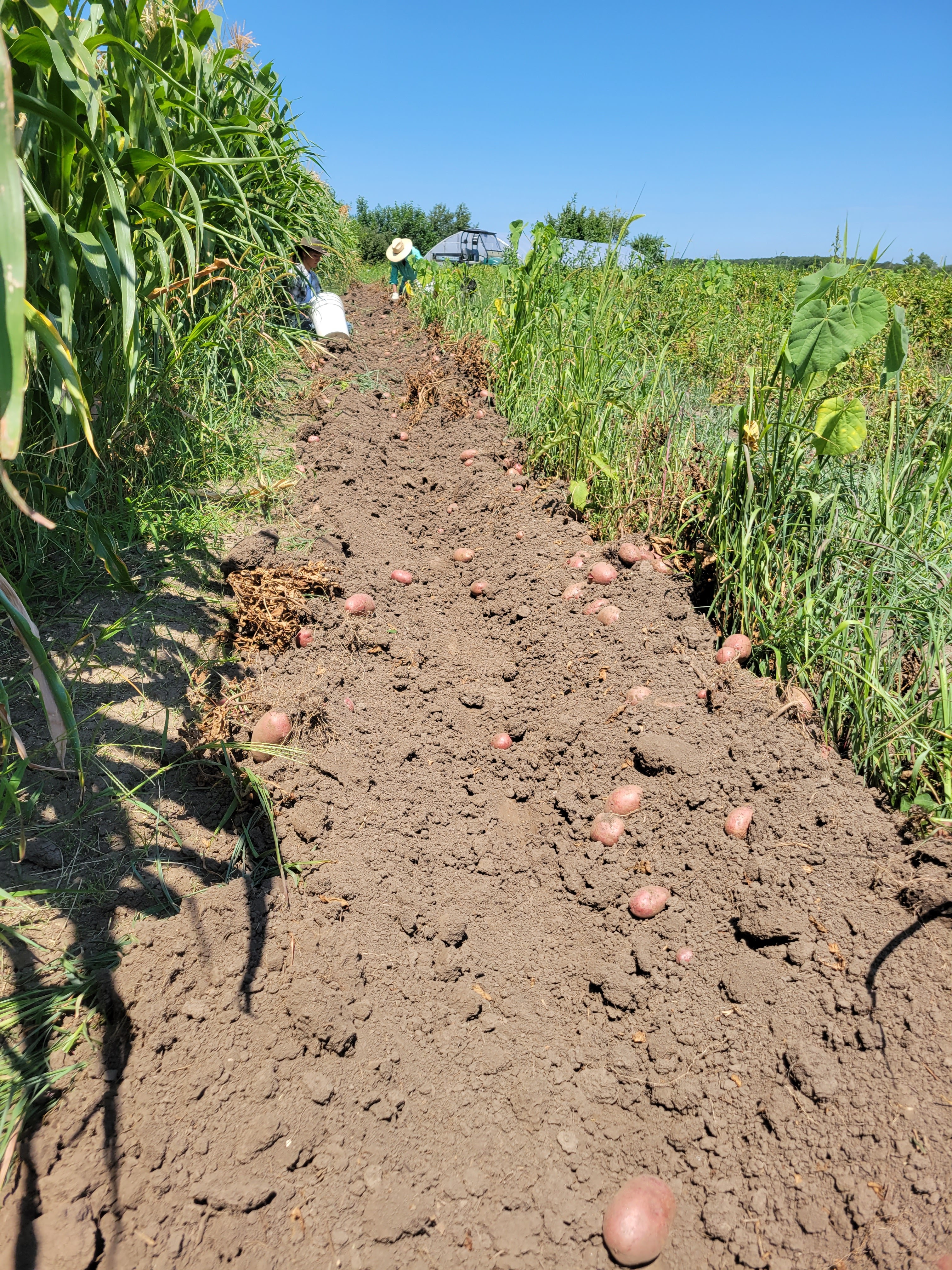
The only damage we had was our Peruvian Purple Corn was blown down, but I'm hoping it will stand back up given the opportunity. And now we've gotten another 1.25" of rain on Tuesday morning! These were a powerful pair of storms so we are pleased to report no serious damage so far besides more corn and sunflowers down and the loss of a young apple tree :(
Dry, dry, dry!
The soil moisture before the rain was really low and we had spent quite a bit of time last week getting the missing sections of irrigations lines run. Since then, we had been running the irrigation daily to make it around to all the plots. Sunday I tilled down some empty beds and the soil was literally dust dry! After tilling I sowed some cover crop seed in hopes that we might get enough rain for it to germinate. BINGO! The timing couldn't have been better!
We did take the opportunity to get lots of cultivating done during last week's dry conditions. Somehow even when it seems like the soil is too dry for anything to grow, the weeds find a way! We also got some more fall crops sown including the final sowing of carrots. It takes lots of irrigation water to get those tiny seeds to germinate in dry soil, so the rain was extra helpful for them!
 Our roselle crop is looking really good and we are excited to send it out in this week's delivery. For those of you unfamiliar, it is an edible member of the hibiscus family and the leaves have a tart, lemony flavor. It is delicious added to pesto and in combination with other greens. I really like it added to (or instead of) lettuce on my sandwiches. Give it a try and see what you think. Here's a concise page about roselle greens and their uses: Roselle.
 We started picking the very first of the slicing tomatoes this week and will be sending them out in just a few boxes this week. So it's time to meet the rest of the tomatoes! (all except Dark Star, Granadero & Marmalade are heirlooms):
Azoycha: Lemon-yellow medium-sized fruits with sweet, yet rich flavor.
Black Krim: Medium "black" tomato with big, high acid flavor.Cosmonaut Volkov: medium-large red slicer with a full-rich flavor
Dark Star: Dark red/purple tomato with rich, tangy flavor.Dr. Wychee Yellow: Large orange tomato with meaty, rich tasting flavor.
Granadero: Red plum tomato with thick-walled fruit; ideal for fresh tomato sauces, salsas, and salads
Green Zebra: Small, 2 1/2" olive yellow with green stripes and a sweet zingy flavor
John Baer: meaty red heirloom slicer
Mandarine Cross: golden-orange, Japanese tomato with a succulent, sweet/low acid flavor.Paul Robeson: Large, brick-red fruits with dark green shoulders. Has a sweet, rich, smoky flavor.
Pantano Romanesco: A large, deep red Roman heirloom. The flesh is very rich, flavorful & juicy.
Redfield Beauty: 3”– 4” flat pink fruits with excellent, full flavor.
Rutgers: large, red with excellent flavor for fresh eating or canning
White Queen: Medium-sized, smooth white-skinned tomato with sweet, juicy flesh, low acid.
Wisconsin 55: A flavorful medium-sized variety that is juicy, firm and ideal for slicing, cooking, and salads
A little detail on your produce this week:
Basil hates the cold and will turn black with exposure. Keep long stemmed basil in a glass/vase of water on your counter top (out of direct sunlight). Stems that are too short (trimmings/tops) should be placed in a glass or plastic container with a dry paper towel. Then put inside of a paper bag (for insulation) and put in the warmest part of your refrigerator (usually the door) or on the top shelf towards the front.
Beans: Fresh beans are an easy "store." Just leave them in their plastic bag and keep them in the produce drawer. Can last up to 2 weeks.
Broccoli/Cauliflower: Wrap loosely in a plastic bag and keep it in the vegetable bin of your refrigerator for up to a week. Immediately before cooking, soak head down, in cold, salted water (1 teaspoon salt to a 8 cups of water) for 5 minutes. Any [organic] critters will float to the top where you can rescue them or allow them to suffer a salty death. (Note: If soaked in salt water before storing, it will become too rubbery and wilted to enjoy.) Slice the juicy, edible stems and use them wherever florets are called for. Peel particularly thick skin before using.
Cabbage: Store dry, unwashed cabbage in the refrigerator, preferably in the vegetable bin. The outer leaves may eventually get floppy or yellowish, but you can remove and discard them to reveal fresh inner leaves. Cabbage can keep for more than a month. Once it’s cut, seal it in a plastic bag and continue to refrigerate for several weeks. Rinse the cabbage under cold running water just before use. Peel away a few of the outer leaves, then cut the cabbage according to your needs with a big, sharp knife, and then chop, sliver, or grate
Cucumber: Store unwashed cucumbers in a sealed plastic bag in the vegetable crisper bin for about a week. Keep cucumbers tucked far away from tomatoes, apples, and citrus—these give off ethylene gas that accelerates cucumber deterioration. You can do a lot of fancy things to the skin of a cucumber, but when it is young, fresh (and unwaxed), it really only needs to be thoroughly washed. However, if the skin seems tough or bitter you can remove it; if the seeds are bulky, slice the cucumber lengthwise and scoop them out.
Eggplant: Eggplant prefers to be kept at about 50° F, which is warmer than most refrigerators and cooler than most kitchen counters. Wrap unwashed eggplant in a towel (not in plastic) to absorb any moisture and keep it in the vegetable bin of your refrigerator. Used within a week, it should still be fresh and mild. Many people like to peel, salt, and drain their eggplant to draw out any bitter flavor; however, bitterness develops only in eggplant that has been stored for a while, so with farm-fresh specimens this is generally not necessary. Many recipes call for salting in order to make the vegetable less watery and more absorbent—much like draining tofu. Salting is not an essential step, but it can greatly enhance the taste and texture of your dish and is well worth the extra effort. The shape of an eggplant determines how it is best prepared. Slice a straight, narrow eggplant into rounds for grilling or broiling, and cut a rounded, bulbous eggplant into cubes for stews and stir-fries.
Fennel: Cut off the stalks where they emerge from the bulb. To use the feathery foliage as an herb, place the dry stalks upright in a glass filled with two inches of water, cover the glass loosely with a plastic bag, and store in the refrigerator for up to five days. The unwashed bulb will keep in a plastic bag in the refrigerator for at least a week. To use, remove any damaged spots or layers. Cut the bulb in half lengthwise and check the inner core. If it’s tough, remove it with a paring knife. Fennel should be washed carefully, because dirt can lodge between the layers of the bulb. Chop or mince the leaves.
Garlic & Onions: Fully cured garlic and onions don't require refrigeration. For longest storage, keep in a dark place with good airflow. Once cut, store in the refrigerator.
Herbs: Generally, except for basil, set unwashed bunches of fresh herbs (with stems) upright into small jars filled with 1 to 2 inches of water, cover loosely with plastic wrap, and refrigerate for up to two weeks. Rinse fresh herbs right before use. To release their scents and flavors, rub them between your hands before mincing or chopping. If you have no idea what to do with fresh herbs, there is one great default answer "compound butter." Finely mince leaves and knead them into a stick of room temperature butter. Roll the butter into a log in plastic wrap and store in the freezer. Then simply slice off the amount you need to add delicious, ready-to-use flavor to vegetables, bread or meats.
Peas: We grow snow peas (flat pod with little bumps showing immature peas inside) and sugar snap peas (rounded pods with mature peas inside). Both have edible pods and can be used interchangeably in recipes. They are particularly good in stir-fries and salads, though we tend to eat them fresh as a snack. Peas keep best in their plastic container in the produce drawer of your refrigerator.
Roselle: Store in a cloth or paper-lined plastic bag in the produce drawer of your refrigerator and use within a week.
Summer Squash/Zucchini: Refrigerate unwashed zucchini and summer squash for up to a week and a half in a perforated plastic bag or in a sealed plastic container lined with a kitchen towel. These do not need to be peeled to use, just slice them up and go!
Tomatoes: always store whole tomatoes at room temperature, out of direct sunlight. Once cut, store in a sealed container in the refrigerator.
Turnips: keep best if separated from their greens. Greens are stored in a plastic bag and can be cooked like mustard or collard greens (you can add them in with your Braising Greens Mix). Trimmed roots can go into a lidded container or zip-close bag. These aren't your grandma's turnips. These are a sweet, Japanese salad variety that is particularly tasty for fresh eating. They will still work great in cooked dishes, but we love to eat them raw, often right out of hand, like an apple. One of the farm crew's favorite mid-field snacks.
A few other details: All of your GREENS will keep best if stored in a plastic bag, with the top folded over and placed in the produce drawer of your refrigerator.
** NOTE: You will notice over the course of the season that some box contents listed above say "Perhaps one of the following..." These are items that we can’t harvest in sufficient quantities for the whole CSA to receive at one time. We do track who gets what and we will do our best to ensure that everyone eventually receives each item. On some items this may take several weeks, so please be patient.
Is a weekly newsletter not enough for you? Do you want to read more about our life on the farm and see more pictures? Follow us on Facebook at Blue Gate Farm or on Instagram at bluegatefarmfresh. CSA members can also connect with other BGF members to share recipes, photos or ask questions on our FB community page at Blue Gate Farm Community.
That's about it for now.
If you have any questions or comments, be sure to let us know.
Best from the farm,
Jill & Sean (and the whole BGF crew)
 |
| Corn down! |
 |
| Dry, dry, dry! |


Azoycha: Lemon-yellow medium-sized fruits with sweet, yet rich flavor.
Black Krim: Medium "black" tomato with big, high acid flavor.
Black Krim: Medium "black" tomato with big, high acid flavor.
Cosmonaut Volkov: medium-large red slicer with a full-rich flavor
Dark Star: Dark red/purple tomato with rich, tangy flavor.
Dark Star: Dark red/purple tomato with rich, tangy flavor.
Dr. Wychee Yellow: Large orange tomato with meaty, rich tasting flavor.
Granadero: Red plum tomato with thick-walled fruit; ideal for fresh tomato sauces, salsas, and salads
Green Zebra: Small, 2 1/2" olive yellow with green stripes and a sweet zingy flavor
John Baer: meaty red heirloom slicer
Mandarine Cross: golden-orange, Japanese tomato with a succulent, sweet/low acid flavor.
Granadero: Red plum tomato with thick-walled fruit; ideal for fresh tomato sauces, salsas, and salads
Green Zebra: Small, 2 1/2" olive yellow with green stripes and a sweet zingy flavor
John Baer: meaty red heirloom slicer
Mandarine Cross: golden-orange, Japanese tomato with a succulent, sweet/low acid flavor.
Paul Robeson: Large, brick-red fruits with dark green shoulders. Has a sweet, rich, smoky flavor.
Pantano Romanesco: A large, deep red Roman heirloom. The flesh is very rich, flavorful & juicy.
Redfield Beauty: 3”– 4” flat pink fruits with excellent, full flavor.
Rutgers: large, red with excellent flavor for fresh eating or canning
White Queen: Medium-sized, smooth white-skinned tomato with sweet, juicy flesh, low acid.
Wisconsin 55: A flavorful medium-sized variety that is juicy, firm and ideal for slicing, cooking, and salads
Pantano Romanesco: A large, deep red Roman heirloom. The flesh is very rich, flavorful & juicy.
Redfield Beauty: 3”– 4” flat pink fruits with excellent, full flavor.
Rutgers: large, red with excellent flavor for fresh eating or canning
White Queen: Medium-sized, smooth white-skinned tomato with sweet, juicy flesh, low acid.
Wisconsin 55: A flavorful medium-sized variety that is juicy, firm and ideal for slicing, cooking, and salads
Basil hates the cold and will turn black with exposure. Keep long stemmed basil in a glass/vase of water on your counter top (out of direct sunlight). Stems that are too short (trimmings/tops) should be placed in a glass or plastic container with a dry paper towel. Then put inside of a paper bag (for insulation) and put in the warmest part of your refrigerator (usually the door) or on the top shelf towards the front.
Beans: Fresh beans are an easy "store." Just leave them in their plastic bag and keep them in the produce drawer. Can last up to 2 weeks.
Eggplant: Eggplant prefers to be kept at about 50° F, which is warmer than most refrigerators and cooler than most kitchen counters. Wrap unwashed eggplant in a towel (not in plastic) to absorb any moisture and keep it in the vegetable bin of your refrigerator. Used within a week, it should still be fresh and mild. Many people like to peel, salt, and drain their eggplant to draw out any bitter flavor; however, bitterness develops only in eggplant that has been stored for a while, so with farm-fresh specimens this is generally not necessary. Many recipes call for salting in order to make the vegetable less watery and more absorbent—much like draining tofu. Salting is not an essential step, but it can greatly enhance the taste and texture of your dish and is well worth the extra effort. The shape of an eggplant determines how it is best prepared. Slice a straight, narrow eggplant into rounds for grilling or broiling, and cut a rounded, bulbous eggplant into cubes for stews and stir-fries.
Peas: We grow snow peas (flat pod with little bumps showing immature peas inside) and sugar snap peas (rounded pods with mature peas inside). Both have edible pods and can be used interchangeably in recipes. They are particularly good in stir-fries and salads, though we tend to eat them fresh as a snack. Peas keep best in their plastic container in the produce drawer of your refrigerator.
Summer Squash/Zucchini: Refrigerate unwashed zucchini and summer squash for up to a week and a half in a perforated plastic bag or in a sealed plastic container lined with a kitchen towel. These do not need to be peeled to use, just slice them up and go!
A few other details: All of your GREENS will keep best if stored in a plastic bag, with the top folded over and placed in the produce drawer of your refrigerator.
** NOTE: You will notice over the course of the season that some box contents listed above say "Perhaps one of the following..." These are items that we can’t harvest in sufficient quantities for the whole CSA to receive at one time. We do track who gets what and we will do our best to ensure that everyone eventually receives each item. On some items this may take several weeks, so please be patient.
Is a weekly newsletter not enough for you? Do you want to read more about our life on the farm and see more pictures? Follow us on Facebook at Blue Gate Farm or on Instagram at bluegatefarmfresh. CSA members can also connect with other BGF members to share recipes, photos or ask questions on our FB community page at Blue Gate Farm Community.
If you have any questions or comments, be sure to let us know.
Best from the farm,
Jill & Sean (and the whole BGF crew)


Blue Gate Farm Pesto